
Godrej Consumer Products (GCPL) had a disappointing third quarter (Q3FY25) with flat volumes (after 7 per cent growth H1FY25). Price hikes will be required to maintain margins to offset the cost of palm oil inflation. However, some analysts see Q3 as an exception with strong volume growth expected to resume and it may be the fastest growing FMCG player in FY26.

Global trends, trading activity of foreign investors and news flow on tariffs are expected to influence movement in the equity market in a holiday-shortened week ahead, analysts said. Equity markets would remain closed on Wednesday for 'Mahashivratri'.

The Director General of Police (DGP) of the Karnataka State Police Housing Corporation, Ramachandra Rao, has denied any knowledge of his stepdaughter Ranya Rao's alleged involvement in gold smuggling. Rao expressed deep distress over the incident, saying his reputation has been tarnished irreparably. He emphasised his lifelong dedication to honesty, integrity and discipline, and said his commitment to public service has always been his priority. Rao said he had no knowledge of the situation unfolding in his life and asked for fairness towards himself and his family. The DGP assured that if any laws were violated by Ranya, legal action would be taken.
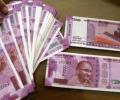
It is only after the government's nod that a particular design change come into effect.

From the Sensex pack, Bharti Airtel, Titan, Tata Consultancy Services, Hindustan Unilever, Infosys, Nestle, Reliance Industries, Mahindra & Mahindra, HDFC Bank and Tata Motors were the biggest gainers. However, IndusInd Bank, Bajaj Finance and UltraTech Cement were the laggards.

After Chennai, it is Coimbatore, Madurai, and Tiruchirappalli, that are emerging as manufacturing hubs. Coimbatore is India's top Tier-II city in terms of the number of GCCs, according to a report by Cushman & Wakefield.

Most global as well as domestic brokerages are upbeat on India's largest IT services provider, Tata Consultancy Services (TCS), despite its performance during the December quarter of FY25, when it missed Street estimates. On the bourses, the TCS share price rallied as much as 6.44 per cent to hit an intraday high of Rs 4,296.80 apiece, before settling 5.67 per cent higher at Rs 4,265.55.

'Could the impending new crisis, vibe coding, similarly create not a disaster like what befell Indian handlooms during the Industrial Revolution but another opportunity like what the Y2K crisis created?' asks Ajit Balakrishnan.

Stock markets are expected to be driven by global trends and FPI trading activity this week after the conclusion of the earnings season, analysts said. Unabated foreign fund outflows, lower-than-expected quarterly earnings and global trade war fears hit market sentiments last week, where the benchmark indices Sensex and Nifty extended their downward trend to the eighth day in a row on Friday.

'If it doesn't, it will continue with measures to infuse liquidity, signalling a new cycle,' predicts Tamal Bandyopadhyay.

Towards the end of February, the Reserve Bank of India (RBI) restored the risk weighting on banks loans to non-banking financial companies (NBFCs; including to microfinance institutions, or MFIs) to 100 - back to its November 2023 position - from 125. It is only a partial relief though. "Higher risk weighting on unsecured lending continues to be in place while the same on bank funding to NBFCs has been done away with. "This is a positive step by RBI," says Rajiv Sabharwal, managing director (MD) and chief executive officer (CEO), Tata Capital.

The recently launched retail central bank digital currency (CBDC) pilot has 50,000 users and 5,000 merchants, the RBI said on Wednesday. "We want the process to happen, but we want the process to happen gradually and slowly. "We are in no hurry to make something happen so quickly," Deputy Governor T Rabi Sankar said at the post-policy press conference in Mumbai.

Tata Elxsi (TelX) reported a weak Q3FY25, with a sharp deceleration in the transportation vertical. However, recent deals in the Asia-Pacific (APAC), higher mix of original equipment makers (OEMs) and partnership with Qualcomm will improve growth. FY25 is the third successive financial year of revenue growth deceleration and second successive financial year of profit deceleration.

The fast-moving consumer goods (FMCG) sector is likely to report muted results in the fourth quarter of 2024-25 (Q4FY25) due to weakness in urban consumption. The weakness may persist through the first half of 2025-26 (H1FY26).

'In today's world, giving time is the most beautiful and priceless thing that you could give your partner.'

The weaker rupee will push the country's import bill due to higher payments for crude oil, coal, vegetable oil, gold, diamonds, electronics, machinery, plastics, and chemicals, economic think tank GTRI said on Friday. Citing an example, it said the depreciating domestic currency will increase India's gold import bill, especially as global gold prices have jumped 31.25 per cent, rising from $65,877 per kg in January 2024 to $86,464 per kg in January 2025.

'The Budget must be pro-growth, focusing on infrastructure creation while also managing the fiscal deficit.'

Indian origin Hindus living in Europe and US are mulling opening overseas chapters of Prayagraj-based 'Ram Naam Bank' in their countries. On the occasion of Ram Navami on Sunday, the idea of opening a Ram Naam Bank was discussed among the devotees in Sweden.
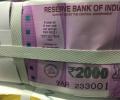
The Reserve Bank on Monday advised banks to provide shade from the sun and water to customers waiting to exchange or deposit Rs 2,000 notes. It can be noted that during the note ban in 2016, there were allegations of customers dying while waiting in queues to exchange bank notes. Following Friday's announcement of withdrawing Rs 2,000 notes -- the notes continue to be legal tender unlike demonetisation exercise -- there were concerns about customers facing inconvenience, especially given the summer being at its peak.

The RBI on Wednesday slashed key interest rate by 25 basis points, for the second time in a row, to support a shuttering economy hit by reciprocal tariffs imposed by the US. Following the rate cut, the key policy rate eased to 6 per cent providing relief to home, auto and corporate loan borrowers.

Indian drugmakers supply 47 per cent of the generic medicine requirements in the US, and tariffs would have increased prices in the US domestic market for patients, who are already dealing with drug shortages.

India's foreign exchange reserves fell for the fourth consecutive week after reaching an all-time high last month. In the week ending October 25, the forex reserves declined by $3.46 billion to $684.80 billion, according to data released by the Reserve Bank of India (RBI) on Friday. In the three preceding weeks, reserves dropped by $3.7 billion, $10.7 billion, and $2.16 billion, respectively, the data showed.

India's politicians need to do a better job of managing the economy: Inflation control, productivity improvement, etc, asserts T N Ninan.

New investors should gradually build a 5 to 10 per cent allocation to gold.
Kannada actress Ranya Rao's frequent trips to Dubai have come under intense scrutiny following her arrest for allegedly smuggling gold into India.

To ease the potential liquidity stress, the Reserve Bank on Friday slashed Cash Reserve Ratio (CRR) by 50 basis points to 4 per cent, a move that would unlock Rs 1.16 lakh crore bank funds. The RBI on May 4, 2022 had raised CRR to 4.5 per cent from 4 per cent in an off-cycle Monetary Policy Committee (MPC) meeting, with effect from May 21 the same year.

The rupee has remained largely stable against the US greenback in the current calendar year (CY 2024), depreciating by just 0.59 per cent so far. However, it has considerably weakened against the euro and pound. The local currency has depreciated by 1.6 per cent against the euro and 5.6 per cent against the pound, as both currencies strengthened against the dollar during this period.

Why has a Reddit user's post -- where the user warns that 'even an IIM tag won't save you' -- created a storm online?
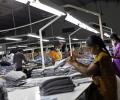
In the shadows of a sliding rupee, India's knitwear hub Tiruppur is weaving a success story. While the domestic currency edges closer to the 86 mark against the US dollar, triggering concerns for many sectors, this textile town in Tamil Nadu is finding opportunity in adversity: Between April and December alone, Tiruppur's exports reached Rs 26,000 crore, almost eclipsing last financial year's total of Rs 30,690 crore.

LTIMindtree's (LTIM's) December quarter revenue, at $1.139 billion, was up 1.8 per cent quarter-on-quarter (Q-o-Q) (5.6 per cent year-on-year or Y-o-Y) in constant currency (CC) terms, marginally ahead of expectations.

Uttar Pradesh Chief Minister Yogi Adityanath has said that forcibly seizing someone's faith and trampling over their beliefs is "unacceptable," especially "when we know the truth about Sambhal" which predates Islam, with the Vishnu temple there being destroyed in 1526. He said that Sambhal has been mentioned in scriptures that are 5,000 years old, which contain references to Lord Vishnu's future incarnation. He also mentioned that a temple of Lord Vishnu in Sambhal was demolished in 1526, and two years later, in 1528, the Ram temple in Ayodhya was destroyed, both acts carried out by the same person.

The exodus of FPIs from the Indian equity markets continued unabated, as they withdrew over Rs 7,300 crore (about $840 million) in the first week of this month due to global trade tensions, with the US imposing tariffs on countries such as Canada, Mexico, and China. This came following an outflow of Rs 78,027 crore in the entire January. Before that, they invested Rs 15,446 crore in December, data with the depositories showed.

Foreign investors pulled out Rs 4,285 crore from Indian equities in the first three trading days of the month driven by apprehensions ahead of the third-quarter earnings season and high valuations of domestic stocks. This came following an investment of Rs 15,446 crore in the entire December, data with the depositories showed.

Abuse of power, financial misconduct, and the never-ending turf wars are now coming to light as Boxing Federation of India's officials jostle to escape blame for the shocking turn of events.

Using credit or debit cards abroad can prove costly.

Widespread use of crypto assets, including stablecoins, can have a negative impact on the macroeconomic and financial stability of a country, the Reserve Bank of India (RBI) said on Monday. In its Financial Stability Report (FSR), the banking regulator highlighted that excessive use of crypto assets can reduce effectiveness of monetary policy, worsen fiscal risks, circumvent capital flow management measures, divert resources available for financing the real economy and threaten global financial stability.

The pilot project for central bank digital currency (CBDC) in the retail segment went live on Thursday with the Reserve Bank of India (RBI) issuing Rs 1.71 crore to four participating banks based on their indents. The central bank has identified four banks for the first phase of the pilot - State Bank of India, ICICI Bank, Yes Bank and IDFC First Bank - in four cities, Mumbai, New Delhi, Bengaluru and Bhubaneswar. The highest indent was received from one private sector bank.

Dabur's pre-quarterly update for Q3FY25 disappointed the market with the share dropping by 3.9 per cent. Growth was slower than expected and inflation hit margins. The management said that the fast-moving consumer goods (FMCG) consumption in rural markets was resilient and continued to grow faster than in urban markets.

Crypto currency platform WazirX, a cyber-attack on July 19 this year in which nearly 40 lakh Indians have suffered a loss of to a tune of $230 million or Rs 19.12 billion, has moved the Singapore high court seeking a moratorium in any legal action against it and for legal protection.

The RBI under former governor Shaktikanta Das resisted pressures to cut interest rates through 2024 as it kept its 'Arjuna's eye' trained on inflation, but the central bank under a new detail-oriented head will soon have to take a call if it can continue sacrificing growth. Das, a career bureaucrat who in 2016 oversaw Prime Minister Narendra Modi's highly disruptive demonetisation move, left a lasting legacy as he demitted office towards the end of 2024 after expertly navigating monetary policy for six years, the highlight of which was steering India's recovery through the pandemic.
